
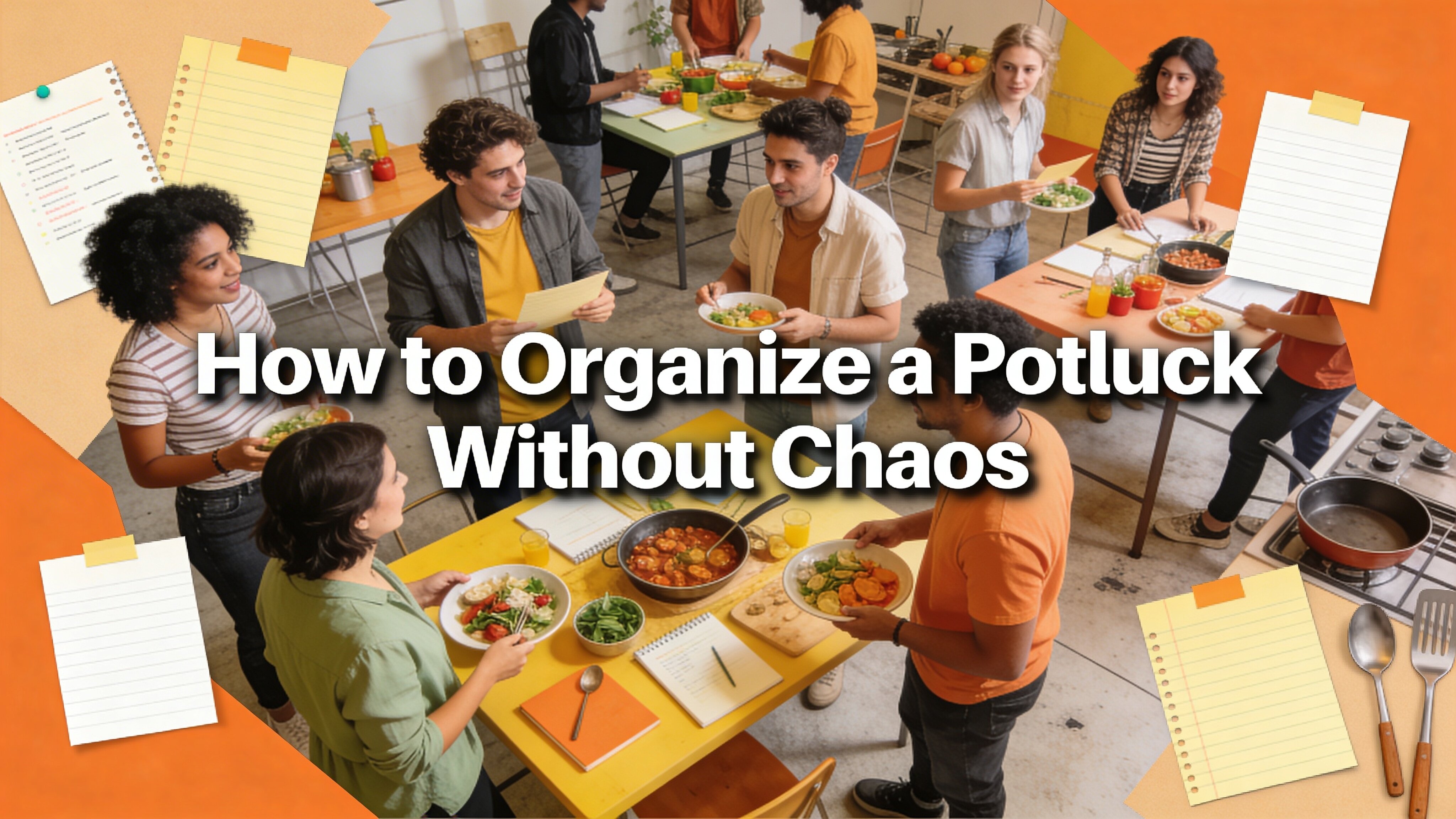
How to Organize a Potluck Without Chaos (Step-by-Step Guide)
Potlucks are easy to plan in theory. Everyone brings food, shares a meal, and enjoys the event together.
In reality, many potlucks fall apart for predictable reasons: duplicate dishes, missing essentials, unclear responsibilities, and last-minute confusion.
The good news is that organizing a successful potluck does not require complicated planning. With a clear structure and a simple coordination system, you can organize a smooth, balanced event in less time than expected.
This guide walks through a practical step-by-step process to organize a potluck that actually works.
Why Potlucks Often Go Wrong
Most problems happen because responsibilities are unclear. Common issues include:
- Multiple guests bringing the same dish
- No main meals and too many desserts
- Guests forgetting what they agreed to bring
- Important items like drinks or utensils being overlooked
- Endless coordination through messages and emails
The solution is not more communication, it is better structure.
Step 1: Decide the Type of Potluck
Before inviting guests, define the format of the event. A clear theme helps guests decide what to prepare and prevents random food choices.
Common options include:
- Casual lunch or dinner potluck
- Holiday or seasonal gathering
- Office or workplace potluck
- Community or volunteer event
- Themed food night (Italian, BBQ, breakfast, etc.)
A defined format immediately reduces confusion.
Step 2: Estimate Guest Count
Your guest count determines how many dishes you actually need.
As a general guideline:
- 6–10 guests: 5–7 dishes total
- 10–20 guests: 8–12 dishes
- 20+ guests: organize by categories with limits
Avoid asking every guest to bring a large dish. Balanced contributions work better than excess food.
Step 3: Create Food Categories
Instead of asking guests, "What will you bring?", divide contributions into categories.
Recommended categories:
- Main dishes
- Side dishes
- Salads
- Desserts
- Drinks
- Snacks or appetizers
- Supplies (plates, utensils, napkins)
Categories prevent overlap and ensure essential items are covered.
Step 4: Limit Each Category
A common mistake is allowing unlimited entries. Setting limits ensures variety.
Example setup:
- 4 main dishes
- 3 sides
- 2 desserts
- 2 drink options
- 1–2 supply volunteers
Once slots are filled, guests simply choose from remaining options.
Step 5: Use a Shared Signup Sheet
Managing responses through group chats or email threads quickly becomes confusing.
A shared signup sheet allows guests to:
- Select their contribution themselves
- See what others have already chosen
- Avoid duplicate dishes
- Stay updated if plans change
Using a single signup list removes most coordination problems before they start.
All signup templates are free and can be shared instantly with participants.
Step 6: Include Non-Food Items
Many organizers forget essential supplies. Add these as signup options:
- Plates and bowls
- Cups
- Serving utensils
- Napkins
- Ice
- Trash bags
- Cleanup helpers
Assigning these early prevents last-minute stress.
Step 7: Set Clear Event Details
Always include:
- Date and time
- Location
- Setup or arrival time
- Food reheating availability
- Dietary considerations
- Parking or access information
Clear logistics reduce repeated questions from guests.
Step 8: Plan for Dietary Needs
Ask guests to label dishes or note dietary preferences when signing up.
Common considerations:
- Vegetarian or vegan options
- Allergies (nuts, dairy, gluten)
- Halal or other dietary requirements
Planning ahead ensures everyone can participate comfortably.
Step 9: Send a Reminder Before the Event
A quick reminder one or two days before the event helps guests stay prepared.
Reminders should include:
- What they signed up to bring
- Arrival time
- Any preparation instructions
Automated updates through a signup system make this step much easier.
Common Potluck Planning Mistakes
No structure
Guests guess what to bring, leading to imbalance.
Too many organizers
One central system works better than multiple coordinators.
Overcomplicated themes
Keep themes simple and easy to follow.
Last-minute planning
Create the signup list early so guests have time to prepare.
Simple Potluck Planning Checklist
Use this quick checklist when organizing:
- Choose a potluck theme or format
- Confirm guest count
- Create food categories
- Limit slots per category
- Share a signup sheet
- Assign supplies and cleanup roles
- Send reminders before the event
Final Thoughts
A successful potluck depends less on cooking and more on coordination. When guests clearly understand their roles, the event becomes relaxed and enjoyable for everyone involved.
With a structured plan and a shared signup system, you can eliminate confusion and focus on hosting instead of managing logistics.